Tatarstan adopts AI Development Programme by 2030
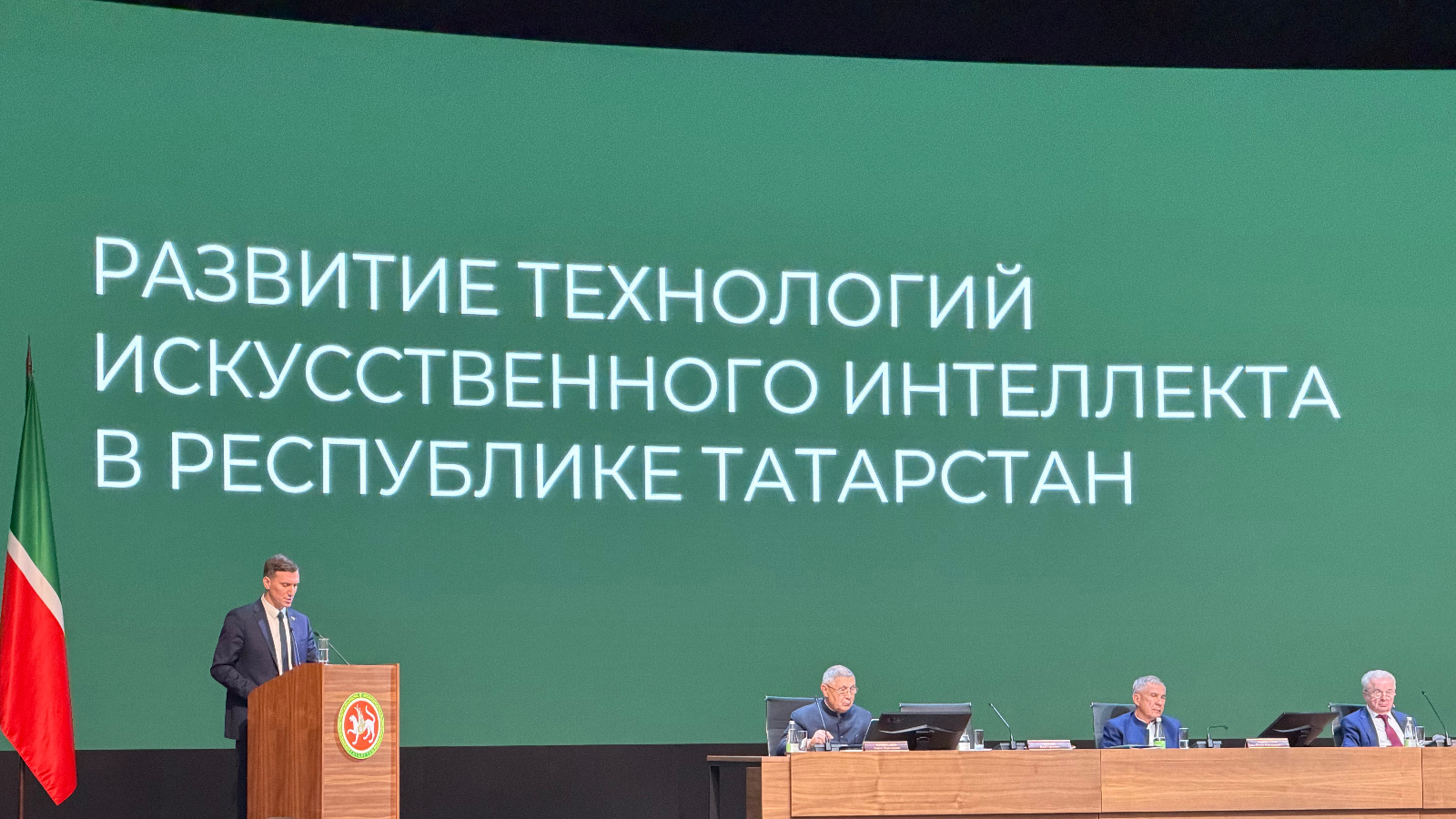
On January 29, at the summing up meeting of Tatarstan Ministry of Digitalization its Minister Ilya Nachvin presented a comprehensive programme for the development of artificial intelligence (AI) technologies for 2026–2030. The report sets strategic guidelines for creating a fully-fledged AI ecosystem in the region.
Today, AI has become a key field of global technological competition. According to the first global AI maturity ranking (2025), Russia ranks 30th. In this context, Tatarstan is focusing on the systemic development of AI technologies in four key areas: infrastructure, human resources, applied projects and science.
"Without computing power, the development of AI is impossible." "We're trying to build a future without a foundation: Russia invests less than 8 billion US dollars in AI infrastructure, while the US invests 459 billion US dollars, and China 136 billion US dollars. Our program aims to close this gap," Nachvin noted.
Current achievements of AI implementation in Tatarstan
• An AI ecosystem for civil servants, "Gosprompt," has been established (over 3,000 users, 15 intelligent assistants);
• In agriculture, AI reduces the incidence of mastitis in cows by half, and early lameness detection systems detect over 90% of cases;
• In Kazan, an AI system analyzes road conditions (over 1,000 km daily), reducing the time to detect problems from 2 days to 1 hour;
• In medicine, AI accelerates X-ray processing at the Regional Radiological Data Center by 5 times.
Key programme areas
1. Infrastructure. The creation of a reliable technological base for the development and implementation of AI solutions is planned. This will lower the entry barrier for small businesses and innovative teams. This also includes further training of global language models (including GigaChat) using regional data. AI is also planned for integration into the Unified Digital Platform of Tatarstan to automate code writing and verification, which will improve the quality of public services and reduce IT infrastructure costs.
2. Human Resources. The goal of this area is to develop a human resource pool capable of leading the republic into the AI era. Today, more than 19,000 schoolchildren and college students are studying programming and AI under the "Code of the Future" project. The programme includes expanding the network of AI clubs (to 100 schools) and professional development for computer science teachers. In the secondary vocational education system, modern AI programs are planned to be implemented in all 35 colleges with an IT focus. Particular attention is being paid to training elite personnel: the Algarysh-AI programme will provide full funding for the education and accommodation of talented students at leading global universities, provided they return to Tatarstan and work for three years at local enterprises. This approach will not only develop specialists but also retain them in the region.
"Programming skills are no longer a unique advantage. The ability to correctly formulate AI problems is becoming more important. Our education system should already be training not just 'coders,' but AI system architects, otherwise we risk losing an entire generation of specialists," Nachvin stated.
3. Applied Projects. This area focuses on the implementation of AI in industries where the technology has a direct impact on citizens and the economy. In government services, AI agents will simplify application submission and reduce the number of refusals. The "Teacher Assistant" system based on the Gosprompt platform will be scaled up in education. In medicine, AI will be used more widely beyond the Radiological Data Center. In construction, AI will automate the verification of completed work reports and cost estimates, and in land management, it will increase property management efficiency by up to 5% of its value. In agriculture, AI-powered platforms will forecast crop yields and plant diseases and in ecology - they will analyze video feeds from mining sites, increasing monitoring efficiency by 50%. In the contact center, AI will evaluate operator performance and process standard requests. The main principle is to adapt the Gosprompt model to the specifics of each industry using local data and regulations.
4. Science. The priority in this area is to strengthen the scientific base and create a science-industry link to transform research into applied solutions. In collaboration with the Academy of Sciences of Tatarstan, two interdisciplinary AI laboratories are planned to be established annually at the intersection of AI and key industries (petrochemicals, agro-industrial complex, medicine, robotics, smart cities and the Tatar language), with the participation of industrial partners. All projects will be assessed based on their commercial potential and readiness for rapid implementation. This will not only advance fundamental research but also ensure its practical impact on the Tatarstan economy and enhance the competitiveness of regional solutions at the federal level.