MTS presents its 2025 results at Tatarstan Ministry of Digitalization
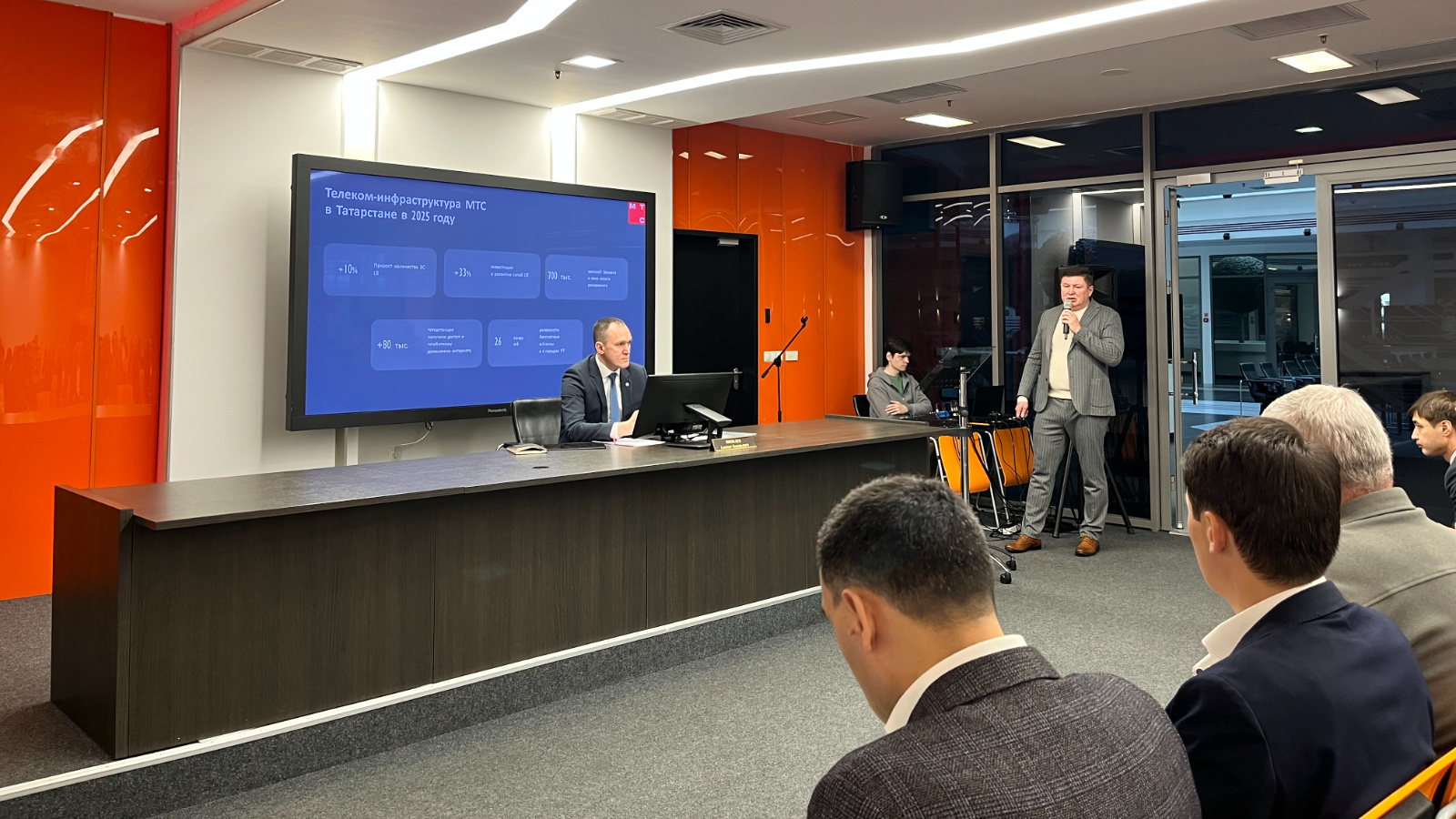
Mobile Telecommunication Systems Company reported on its activities in Tatarstan for the year 2025 during a weekly meeting at Tatarstan Ministry of Digitalization.
Director of the MTS branch in Tatarstan Marat Kabanov outlined key areas of work in 2025 and the achieved results.
Key Infrastructure Projects
Considering the continuous growth in load on telecommunications infrastructure, work on developing and modernizing the mobile and fixed-line networks continues to ensure digital comfort for residents of Tatarstan.
In 2025, the number of MTS LTE base stations in the republic increased by 10% and investments in network development and modernization grew by a third.
The re-farming (upgrading outdated 3G frequencies to the modern LTE standard) conducted in Bugulma, Leninogorsk and Aznakaevo enabled an average increase of 30% in mobile internet speeds. Updated internet speeds and VoLTE voice call technology became available to over 700,000 residents of Zakamye.
The fixed network is available in 12 cities across the republic. Due to upgrades and the installation of new equipment, another 80,000 Tatarstan residents gained access to gigabit home Internet in 2025, and the number of connected households more than doubled.
For example, gigabit Internet is now available in homes of residential complexes such as "Svetlaya Dolina," "Green," "Elegy," "My Rhythm" and "Melody" in Kazan. Beyond access to standard digital services, residents can integrate "smart home" elements into their apartments — water and heat meters, door and window sensors, smart surveillance systems and other solutions that enhance comfort and safety.
The company also deployed 26 free Wi-Fi hotspots in Kazan, Nizhnekamsk, Naberezhnye Chelny, Almetyevsk, Zainsk and Leninogorsk. Connecting to these wireless networks is possible via secure authorization using a phone number from any device.
As part of the digital inequality elimination program, in 2025, MTS provided connectivity and high-speed internet to 41 settlements across 20 districts of Tatarstan — home to over 11,000 residents. The highest number of villages connected were in the Kukmorsky and Mamyadishsky districts. This has contributed to improving living conditions and quality of life for local residents.
MTS also continued implementing its programme to equip federal highways M5, M7, and M12 with reliable communications.
The main work on expanding LTE coverage last year took place along a 220-kilometer section of the M-12 federal highway from Kazan to Naberezhnye Chelny. By the end of 2025, the amount of downloaded internet traffic on this segment more than doubled.
Updated connectivity and fast internet reached not only drivers and their passengers but also residents in nearby settlements in Pestrechinsky, Rybno-Slobodsky, Tyulyachinsky, Mamyadishsky and Elabuzhsky regions.
Over 30 new base stations were deployed along these routes. The coverage expansion was made possible due to subsidies allocated by the Government of Tatarstan.
Projects Promoting Digital Economy Digitization
In partnership with local businesses and government authorities, MTS implements digital solutions aimed at automating routines, saving resources, reducing costs and enhancing safety within organizations.
For example, there is a noticeable trend toward moving away from expensive server hardware in favor of cloud-based solutions. In 2025, the investment volume of Tatarstan companies in cloud services grew by 11%.
The highest consumption of cloud services was observed among Tatarstan companies engaged in scientific and technical activities, followed by logistics. Retailers in the region also showed strong interest.
According to MTS analysts, among local businesses and government institutions, interest in AI-based solutions is also growing. These are actively being adopted across various sectors — from telecommunications and healthcare to manufacturing enterprises.
One example is the MTS Link platform for business communication. The AI assistant integrated into it was used six times more often by Tatarstan residents in 2025 compared to the previous year. MTS Link experts found that such AI tools could save up to 12 hours per week, translating into an economic benefit of up to 153 thousand rubles per month for each manager.
Over the past year, MTS in Tatarstan also recorded a 13% increase in the number of smart devices, with the highest growth in agriculture — up 37%.
For example, in livestock farming, IoT technologies are used to increase productivity. Farmers monitor cow milking processes through smart surveillance, while intelligent sensors on milking equipment collect data to assess cow performance. As a result of this project, implemented jointly with the Regional Information and Computing Center, animal disease rates declined, product quality improved and productivity increased by 31%.